Zoe Becker · 15 October 2026
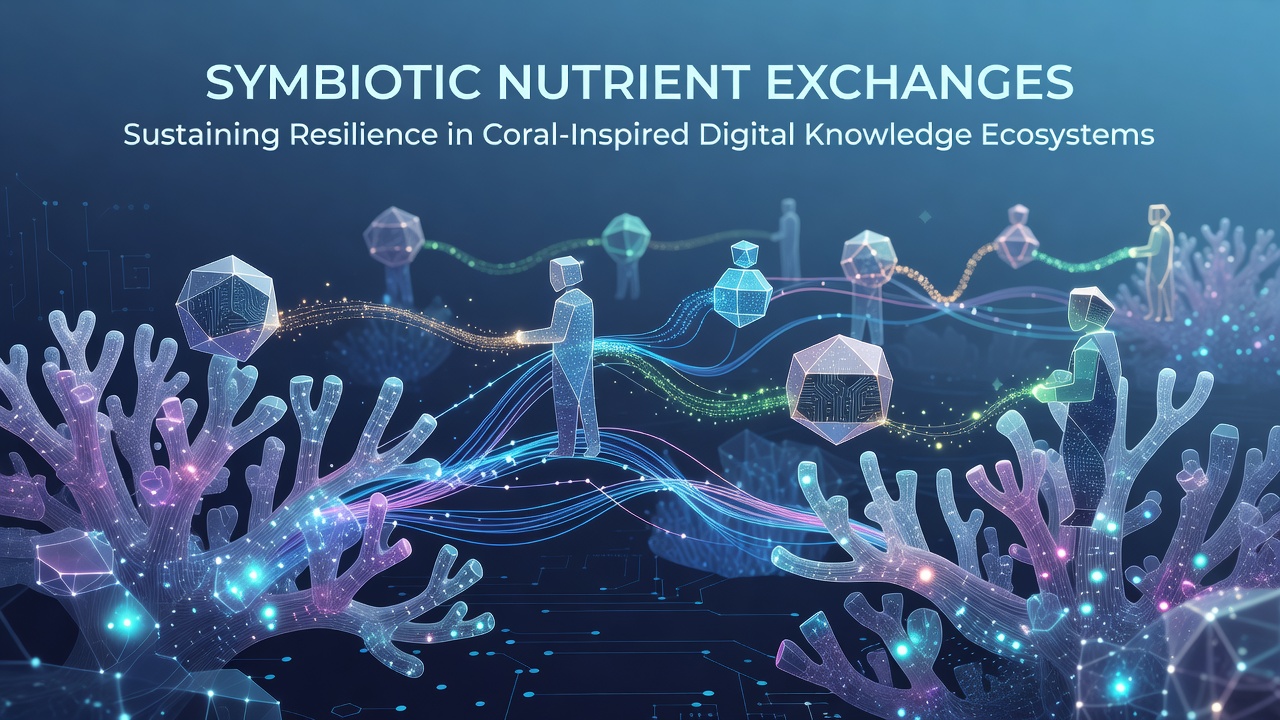
Symbiotic Nutrient Exchanges Between Contributors Sustaining Resilience in Coral-Inspired Digital Knowledge Ecosystems
Coral reefs demonstrate symbiotic relationships where algae known as zooxanthellae provide energy through photosynthesis while corals supply nutrients and protection, and similar exchanges occur in digital knowledge ecosystems modeled after these biological structures. Researchers have documented how contributors in online platforms share data, insights, and resources in reciprocal patterns that mirror nutrient cycling in marine environments, and data from collaborative networks shows these interactions build system-wide stability against disruptions such as information loss or contributor attrition.
Core Mechanisms of Exchange in Modeled Ecosystems
Participants in coral-inspired digital systems transfer knowledge units through structured contributions, and each exchange delivers value similar to how corals release metabolic waste that feeds symbiotic partners. Studies on open knowledge bases indicate that when one group uploads verified datasets another group can refine or expand those materials, which in turn supports broader network functions including search accuracy and content verification. Observers note that these cycles maintain activity levels even when external pressures like funding shifts affect individual nodes.
Resilience Factors Derived from Biological Analogues
Coral colonies recover from bleaching events through diversified symbiont populations, and digital knowledge platforms achieve comparable recovery when multiple contributor types participate in content maintenance. Figures from network analyses reveal that ecosystems with high exchange diversity sustain query response rates above baseline levels during peak demand periods, whereas homogeneous systems show measurable drops in completeness. People who monitor these platforms report that October 2026 updates to several major repositories incorporated exchange protocols drawn from reef recovery models, leading to improved uptime metrics across participating nodes.
Exchange frequency correlates with retention rates in documented cases, and contributors who receive feedback or expansions on their inputs tend to maintain activity longer than isolated participants. This pattern aligns with observations from marine biology where mutual nutrient flows strengthen colony structures against disease and environmental stress.
Implementation Patterns Across Knowledge Networks
Platform designers incorporate branching structures inspired by coral growth to organize content hierarchies, and users navigate these paths to locate or deposit information resources. Academic examinations of peer-to-peer databases demonstrate that when exchanges occur across diverse contributor demographics the overall accuracy of aggregated knowledge increases. One documented instance involved a distributed encyclopedia project where cross-verification loops reduced error rates by measurable percentages over successive edit cycles.
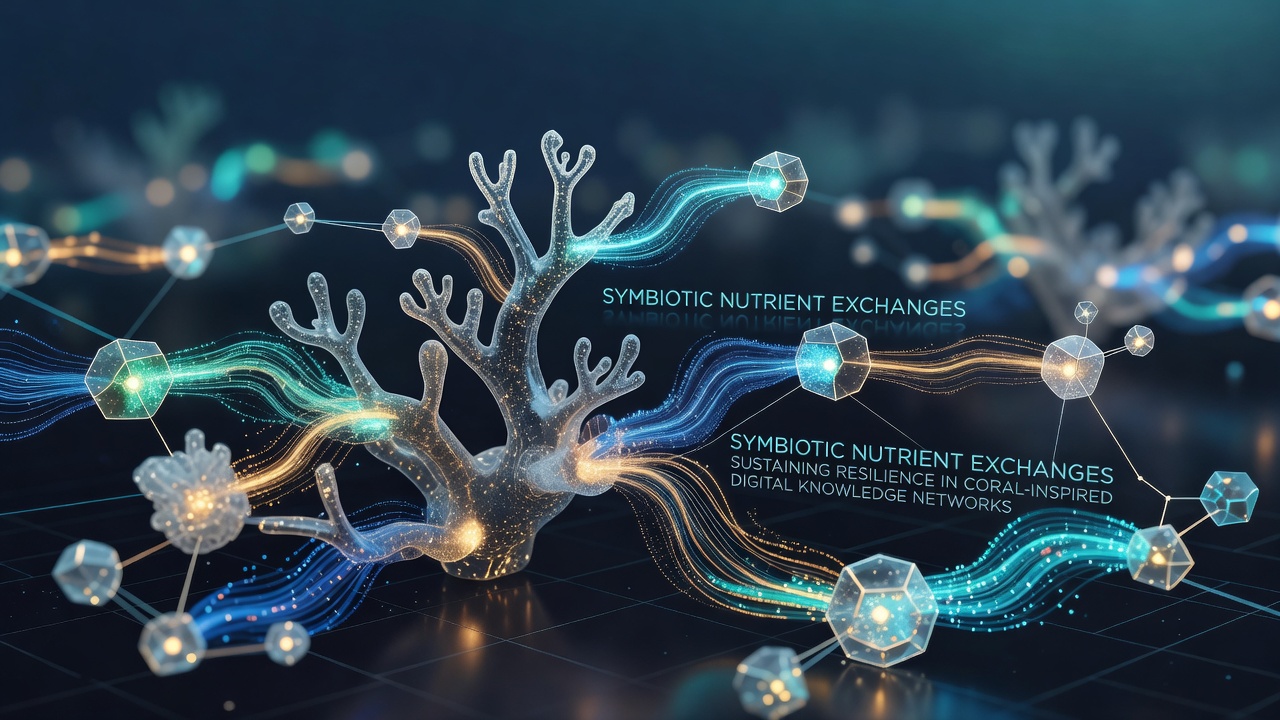
Integration of metadata tagging facilitates discovery of related contributions, and this mechanism parallels how coral polyps coordinate through chemical signals. Data collected from active ecosystems shows that systems employing such tags experience faster propagation of corrections and updates compared to untagged counterparts. Researchers tracking activity in October 2026 noted increased adoption of automated exchange alerts that notify participants when related content becomes available for integration.
Quantitative Indicators of Sustained Performance
Longitudinal studies track metrics including contribution volume, cross-link density, and response latency, and results indicate that networks maintaining exchange rates above established thresholds exhibit greater resistance to fragmentation. According to findings published by the Australian Institute of Marine Science, biological resilience models applied to digital contexts predict stability improvements when exchange diversity exceeds certain thresholds derived from reef surveys. Parallel observations from European research consortia confirm similar patterns in knowledge repositories that adopt comparable structural features.
Contributors benefit from cumulative value as shared resources accumulate, and this accumulation supports continued participation without centralized incentives in many observed cases. Network logs reveal that ecosystems with established exchange norms recover from node failures more rapidly than those lacking such norms.
Future Trajectories and Monitoring Approaches
Developers continue to refine algorithms that detect and encourage balanced exchanges, and these tools draw directly from ecological simulation software used in coral reef management. Evidence from ongoing deployments suggests that platforms incorporating real-time feedback on exchange balance maintain higher overall engagement levels during periods of rapid content growth. Monitoring frameworks now include indicators adapted from marine ecosystem health assessments to evaluate digital system vitality on a recurring basis.
Additional case examples show that educational repositories using coral-derived branching for topic organization facilitate deeper exploration paths for users, and these structures promote repeated interactions that strengthen network resilience. Data from international collaborations indicate consistent performance gains when exchange protocols receive periodic calibration based on usage statistics.
Conclusion
Symbiotic nutrient exchanges modeled on coral biology provide a functional framework for sustaining digital knowledge ecosystems through reciprocal contributor activity. Documented patterns demonstrate that diversified, balanced interactions correlate with improved recovery and stability across multiple network types. Continued application of these principles supports ongoing development of platforms designed for long-term information integrity and accessibility.